Money and Family Conflict: The Hidden Reason Families Fight About Money
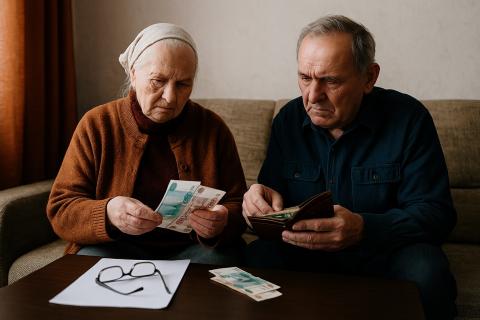
Money issues destroys more families than we are ready to admit.
I wrote this text for my family.
But I also know that situations like this exist in many families.
Sometimes money is not about money at all.
It is about love, expectations, and old family patterns carried through generations.
Sometimes the most difficult conversations in a family are conversations about money.
But in reality, these conversations are almost never truly about money.
Although I am writing this mainly for my own family, where this problem exists, I also know that similar situations appear in thousands of families in Western civilization.
Unfortunately, very often the higher the material wealth of a family, the more frequently these situations arise — situations that usually do not affect people in communities where family remains essential for survival.
Sometimes a member of the family may need help for a long time.
In many cases, this happens so that the family itself can face and heal deeper problems related to money and relationships between relatives.
And the longer one or both sides cannot understand this, the longer the situation may continue.
We live in a time when information that was hidden from humanity for centuries is now becoming open and understandable.
The causes behind certain events and situations in family life are becoming clearer.
This gives us the opportunity to change our lives for the better.
For many centuries, negative behavioral patterns and difficult situations have been passed down in families from generation to generation.
These situations often appear so that family members can do something better than before, break these patterns, and end the programs that have been repeating through generations.
Unfortunately, this has not happened as often as one might hope.
- People are people.
Human ego,
The loss of connection with one’s soul,
Misunderstanding of the laws of life,
Lack of knowledge about family history,
Loss of connection with nature and ancestors
all of this prevented us from understanding something very important.
In past, we did not understand that these patterns must be changed and completed.
And that by healing them, not only we, but also the next generations – our children, grandchildren, and great-grandchildren – will be able to live better lives.
People of the past did not realize that by changing ourselves – our way of thinking and feeling, not only our actions – we could change not only our own lives but also influence the lives of others.
We did not understand that through our thoughts, emotions, and feelings we influence one another, and that in reality we are all part of one whole.
Instead, we perceived ourselves as separate individuals and did not know about the energetic, spiritual, and invisible connections that link us together.
I am writing this because I want to explain to my family and loved ones how important not only our actions are, but also the feelings and intentions behind those actions.
In our family lineage, as in many others, there are inherited patterns that lead to painful outcomes.
One of the strongest and most difficult family issues in thousands of families and not only mine, is the relationship between money and family.
I am speaking about the connection between money and people.
About how a family relates to money – and through that, how it relates to children, parents, brothers, and sisters.
In our family, as in thousands of others, there were losses, bankruptcies, betrayals from relatives and outsiders, deaths, and many difficult events connected to money and life itself.
All of these negative situations from the past generations cast a shadow over the present.
Every member of the family becomes involved in these patterns in one way or another, trying to solve them in their own way – and not always in a healthy or beneficial way.
These situations appear at different times and in different forms.
But I believe that each of us, if we truly wish, can honestly analyze our actions, our feelings, and our thoughts – and see what results they have created.
We can look at how we feel and think, when help one another.
What feelings and thoughts arise in the person who is giving help and the one who receives it (which is a problem for many as well – but not discussed in this article), and what results that help ultimately produces.
Help that is given with intentions other than genuine LOVE can lead to completely different results than expected.
For example, when someone gives financial help for a business or project but secretly hopes to receive profit later, this rarely leads to a good outcome.
Both sides often lose money.
Because this was not truly help.
It was an investment made with the wrong intention.
It was called help because there was doubt about the success of the venture, but at the same time there was a desire to appear generous:
“I am a good person. I help others.”
And at the same time there was also the hidden desire to profit:
“Maybe it will succeed, and I will also receive a piece of the pie.”
This is not help.
This is not love.
And because of self-deception – which may be one of the strongest human weaknesses – both sides lose.
The feeling and intention with which money is given often determines the result that follows.
Every family is different.
In many families, relatives help each other.
But such help should come from a state of love for another person – without judgment, without expectations of how things should unfold, and without controlling what the person receiving help should do.
Giving, helping children, parents, relatives, and loved ones only from a place of love and acceptance of the situation brings benefits to both sides.
Help that comes from any state other than love carries heaviness – and it leads to heaviness.
Expectations lead to disappointment.
The burden of help given from such states creates problems for both sides and can remain as a heavy weight carried through generations.
Love is what can heal the situation.
The love of parents for their children – regardless of whether the children fulfill their expectations, with complete acceptance and understanding that everyone has their own path.
The love of children for their parents – also without judgment, and with the understanding that helping parents can be a sign of maturity and an opportunity to express love.
So when someone in the family needs help, and other members of the family have the ability to provide it – without criticism, judgment, envy, or expectations – it becomes an act of love.
And the most important thing here is this:
help without criticism, expectations, judgment, envy, or misunderstanding.
Help given from other motivations often becomes self-deception and does not heal family patterns.
Instead, it creates new complications and energetic ties that sooner or later appear again in the life of the person who gave the help.
I repeat that I write this with gratitude for the help that has been given to me.
At the same time, I want my family and loved ones to understand how important not only our actions are, but also the feelings and intentions behind them.
I hope that understanding this can help improve the situation and make life easier for everyone in the family.
Because such unresolved issues affect every member of the family – even if they do not admit it to themselves.
And I hope that these reflections will not only help my own family, but also bring clarity to other families and help them find understanding and balance.